
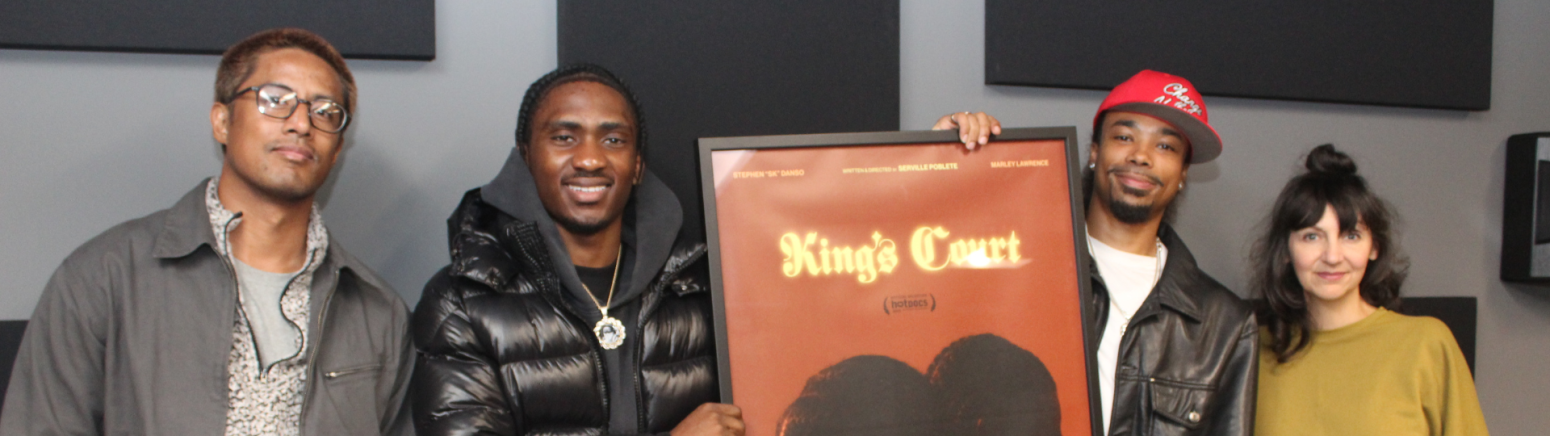
A friendship forged on the court
Bleecker Street documentary explores family, brotherhood, and basketball
Sitting in the screening room at the National Film Board of Canada (NFB) with the central cast, director, and producer of King’s Court, one is struck by the passion they display for their film. It is a short documentary about two youth who grew up together on Bleecker Street in the neighbourhood of St. James Town.
“When I read Serve’s (Serville Poblete, the film’s director) proposal for this film, I could see it playing out in my head immediately,” said Kate Vollum, a 19-year NFB veteran who produced the film. “I knew I wanted to get involved with everything about it.”
Shot in one of Toronto’s most diverse and densely populated neighbourhoods over a two-year period, King’s Court gives an open and honest look at the friendship between two Bleecker Street youth. Marley and Stephen (or “SK”) come of age both on and off the basketball courts that have been a fixture there for decades. The film has enjoyed a lot of success. It ran at Hot Docs and then at the Regent Park Film Festival.
Serve, a director who also grew up on Bleecker, was frank when he talked about the realities of getting it made. “It kind of happened accidentally,” he said. “I was trying to make this film by myself, and it was hard to get funding, because people thought it was a film about just basketball and sports.”
Thankfully, Kate saw the film for what it was and helped give it the green light. She also enjoyed the process of helping to grow the idea and piece the film together. “It's this really great time where we get to experiment and figure out the approach,” she said. “For the first three days of shooting, we followed Marley and SK around with a camera as they walked around the neighbourhood talking to each other, with hardly any prompting. When we reviewed the footage later, it was startling to see how easily they spoke of these difficult topics, big ideas, and vulnerable moments. It almost felt like it was scripted.”
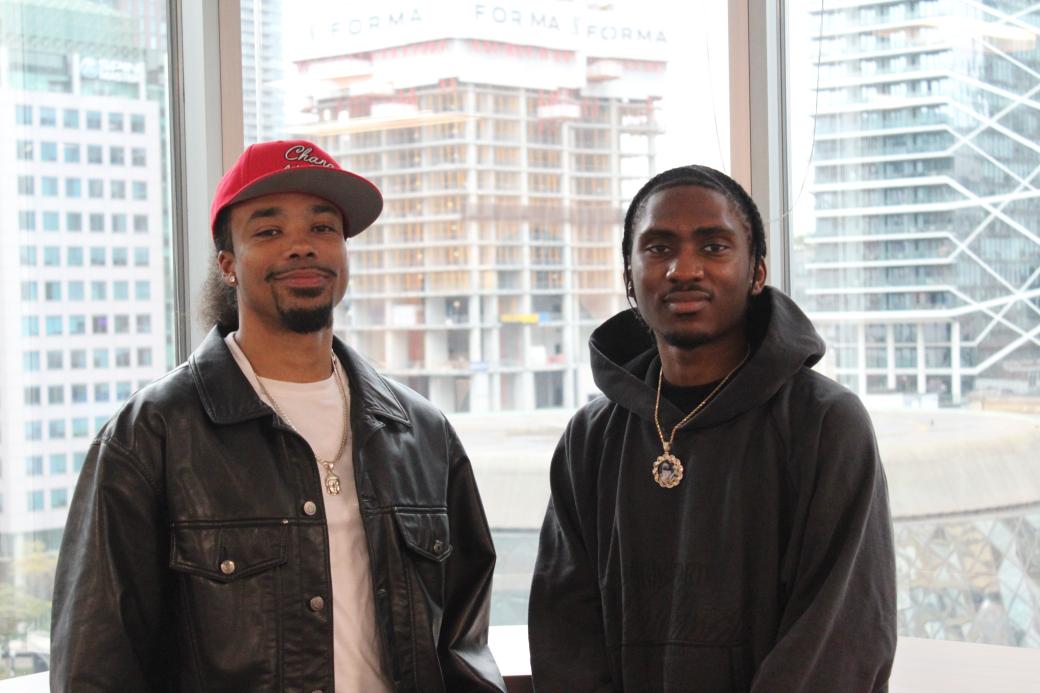
Marley and SK at the National Film Board of Canada office
TCHC also helped when the crew needed permission to film in certain locations. “One of the key spots for us was shooting on that basketball court, Nike Court, because this was where these guys spent so much time,” Kate continued. “But we also recognized that there are some challenges in taking a court away from the community for a period of time.” That’s when they contacted Jerome Leach. Jerome was the Community Services Coordinator at the time, who helped remove those barriers. “He just smoothed that road for us and made everything happen,” said Kate. “He was so excited to hear about the film and wanted to do whatever he could to make it happen. From there, we built this really great relationship with folks from TCHC.”
King’s Court is more than a basketball film, exploring complex issues shared by two friends. They clearly love their neighbourhood but aren’t shy about discussing the challenges they’ve faced growing up there. “You're talking about life, you know, the best and worst types of things,” said Marley. “Brotherhood is embraced in our neighbourhood, but it's through the struggle. Stuff like basketball is what ties that struggle and that success all in together.”
“You’re talking about life, you know, the best and worst types of things.”
It's clear when watching the movie that basketball is the common ground where youth in the neighbourhood work out their issues with life (and even with each other). It’s on the court where moments of genuine tenderness emerge, which is exactly what Serve was trying to show.
“I think so much of our culture craves trauma in film for some reason, and I think sometimes we don't give softness and love a chance to take centre stage,” he said. “I think this film is proof that you don't always need conflict and struggle to fuel a meaningful conversation.”
SK spent six months in the United States on a basketball scholarship, and really likes the film’s approach. “As much as this film was for me and my family, I also wanted to show youth that they can succeed too,” he said. “The way this film was shot aligns with that, because the youth that watch it get inspired and understand that there are people that go through the same things they do. I want them to know that no matter the toughness and the adversity you deal with, there's always hope, and you can always be bigger than your environment. You don't have to just succumb to what your environment is telling you to become.”
King's Court on the NFB's website
Watch the documentary for free on the National Film Board's website.
Watch King's Court