
Swansea Mews: Vision
TCHC’s vision for the Swansea Mews Revitalization is to create a community that fosters strong connections, growth, identity, and sustainability.
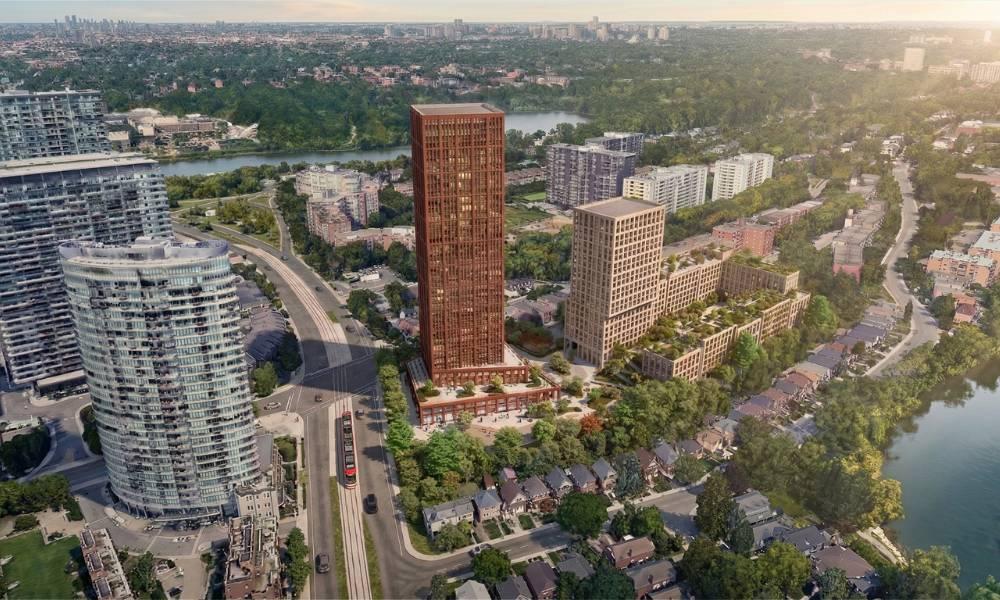
Image courtesy of KPMB Architects
About the revitalization
Former Swansea Mews tenants can look forward to returning to new, high-quality residential buildings, if they choose. As part of this vision, TCHC will be adding:
- more affordable housing,
- higher-quality homes,
- new community space and amenities, and
- more open space with improved connections.
Click on the images below to view.
Meet the Swansea Mews Revitalization Team
TCHC has assembled an award-winning team to support its Swansea Mews Revitalization project. The team will be involved in all aspects of the revitalization, including planning, engineering, environmental studies, design, and community engagement.
Throughout the planning process, tenants and community members will have many opportunities to meet the team, learn more about the work, and ask questions.
The Swansea Mews Revitalization team includes:
- TCHC – Development and revitalization Lead
- Bousfields Inc. – Planning, urban design, and community engagement
- KPMB Architects – Architecture
- PFS Studio – Landscape architecture
- BA Group – Transportation planning
- Purpose Building – Sustainability
- Lithos Group – Environmental
Frequently asked questions (FAQ)
What is the vision for the new Swansea Mews?
The vision for Swansea Mews is to create a community that fosters strong connections, growth, identity, and sustainability.
Toronto Community Housing (TCHC) looks forward to building two modern, high-quality residential buildings. The revitalization includes a mix of unit types. The 154 existing Rent-Geared-to-Income (RGI) units will be replaced, and new residential units will be added. We are also proposing to build other types of spaces, like new ground floor commercial and community spaces.
Residents can expect new amenities in the building. This will be similar to amenity areas in other new TCHC buildings and communities.
TCHC’s revitalization vision for the Swansea Mews property is to add:
- 649 new residential units with a mix of affordability levels (this includes 154 replacement RGI units).
- A mix of unit types ranging from 1- to 5-bedroom units.
- 121 parking spaces for vehicles.
- 1,205 m2 of new indoor commercial and community space.
- 1,397 m2 of indoor amenity space.
- 5,588 m2 of outdoor amenity space.
- Extensive landscaping improvements, including a Privately-Owned Publicly Accessible Space.
You can learn more about the revitalization and the revitalization vision in the Public Consultation Strategy Report, Section 04: Proposal Highlights, available on the City of Toronto’s Application Information Centre.
I’m worried about the proposal impacting green spaces and the local environment.
Sustainability is top of mind for TCHC and this project. We have retained sustainable building specialists who will be evaluating and providing solutions to tackle climate resiliency and energy efficiency for the new modern building.
We want to also make sure that the new Swansea Mews complements the area and does not adversely impact the natural environment. The environmental components of the property redevelopment are being studied in order to mitigate against potential flooding and stormwater management.
What does the Planning Application and Process involve?
TCHC must get permission from the City of Toronto before redeveloping the Swansea Mews property. This ensures there is a good plan in place before the City provides any permissions to proceed with the revitalization.
How long will this whole process take?
We are in the early stages of the planning application process, and we want to hear from you on how this proposal can positively contribute to the community. This is a priority project for TCHC and the City of Toronto. We anticipate that we will have a decision from Council on the rezoning in 2026.
What is the rationale for the proposed density?
TCHC is proposing two buildings with heights of 35 and 20 storey. This level of density aligns with the Initial Development Proposal (IDP), which City Council approved in April 2025. While IDP approval is not a formal decision on a planning application, it establishes Council’s expectations and directives for new housing and density on the site and for this revitalization project. The proposed density represents the most efficient use of this highly valued public asset. It allows us to build hundreds of new high-quality affordable rental homes for a range of household types and incomes.
Under this revitalization, this purpose-built rental housing development will be publicly owned and managed.
The revitalization will see different levels of government investing in affordable housing. The funding for the project will come from federal and municipal programs and incentives. The amount of funding and financing depends on the density of the proposed development. The revitalization project must include enough market and affordable housing units so that the development is financially viable.
The proposed density also reflects provincial and municipal policy directions. These directions encourage more density in areas that are well served by municipal infrastructure, including public transit.
This revitalization project responds to these directives with a carefully designed project that fits with the existing and planned surrounding context. To learn more about the policies and guidelines that shaped the revitalization, please see the Planning and Urban Design Rationale, Section 05: Planning & Urban Design Analysis, available on the City of Toronto’s Application Information Centre.
What measures will be taken to address potential traffic impacts?
A Transportation Impact Study (TIS) was prepared to review the proposed redevelopment’s impact on the adjacent road network. The TIS considered impact over a five-year period to 2030 and recommends mitigation measures. The TIS reviewed the proposed vehicle and bicycle parking, loading provisions, and public transit. It looked at overall functionality of the proposed revitalization.
The study provided the following recommendations:
- The Queensway and Windermere Avenue: Adjust signal timing to ease traffic heading south, while maintaining streetcar priority. Remove the northbound left-turn advance signal during weekday peak hours. These changes aim to shorten vehicle line ups in all directions.
- The Queensway and Ellis Avenue: Optimize signal timing to reduce east-west line ups. Make sure signal timing aligns with changes at Windermere. These changes will improve intersection performance and reduce line ups in all directions.
- New driveway: Expected to operate under busy but acceptable conditions. Expect wait times of about 28 seconds in the morning peak and 39 seconds in the afternoon peak.
To learn more, you can access the full TIS or review a summary in the Planning and Urban Design Rationale, Section 05: Planning & Urban Design Analysis. Both are available on the City of Toronto’s Application Information Centre.
Will the existing infrastructure be able to accommodate the proposed density?
Planning for a new development includes making sure the site has connections to water, sewage, drainage, grading and utility services. To check this, we prepared a Functional Servicing and Stormwater Management Report (FSR).
The FSR finds that existing municipal water and sanitary services can support the Revitalization.
The FSR recommends design measures for the stormwater management system. This system will enhance protection and meet regulatory standards. The proposed design will improve current drainage conditions to comply with the City’s updated requirements.
The FSR finds that the proposed redevelopment is appropriate for the size and scale of the development because there is enough infrastructure and servicing capacity to accommodate the Revitalization.
Further details will be finalized during the detailed design stage. The full report is available on the City of Toronto’s Application Information Centre. You can also read a summary in the Planning and Urban Design Rationale, Section 05: Planning & Urban Design Analysis on the City of Toronto’s Application Information Centre.
How will the redevelopment create a safe environment for future tenants and surrounding community members?
TCHC is committed to the safety and well-being of all residents across its properties. The revitalization includes design features that aim to create a more open and visible environment:
- The “U”-shaped northern building surrounds the raised courtyard
- At the south end, public spaces will be located next to retail spaces and open onto The Queensway
- Modern lighting and landscaping for clear, well-lit pathways and public areas
Other features will be developed during the detailed design process. This includes enhanced safety and security systems.
You can view details on the proposed landscaping in the Landscape Plans on the City of Toronto’s Application Information Centre.
Will there be future opportunities to get involved?
We appreciate the interest of Swansea Mews tenants and the surrounding community in the revitalization project. Over the past few months, TCHC has hosted many consultations with Tenant Leaders and Swansea Mews tenants, as well as:
- a virtual community-wide consultation meeting in September 2025
- an in-person Community Consultation Meeting, hosted by the City of Toronto, in November 2025.
There will be more opportunities for tenants to engage in 2026 as the design evolves through the site plan approval process.
In early 2026, the revitalization proposal will be presented to the City of Toronto’s Planning and Housing Committee. This will be another opportunity for tenants and community members to provide feedback on the revitalization.
TCHC also shares information about the project on our website and with Swansea Mews tenants through email. Please visit the webpage or contact the project team to learn more, share feedback, or ask questions.
- Project webpage: https:/torontohousing.ca/swansea-mews
- Project email: swansea.mews@torontohousing.ca
We want to hear from you!
Reach out to the Project Team
For TRS support, dial 7-1-1.
Phone:
647-654-8639
Email:
swansea.mews@torontohousing.ca
